
How Human Ear listen voice
Hearing is a complex process that involves the ears, the auditory nerve, and the brain working together. Here’s a simplified breakdown of how we hear:
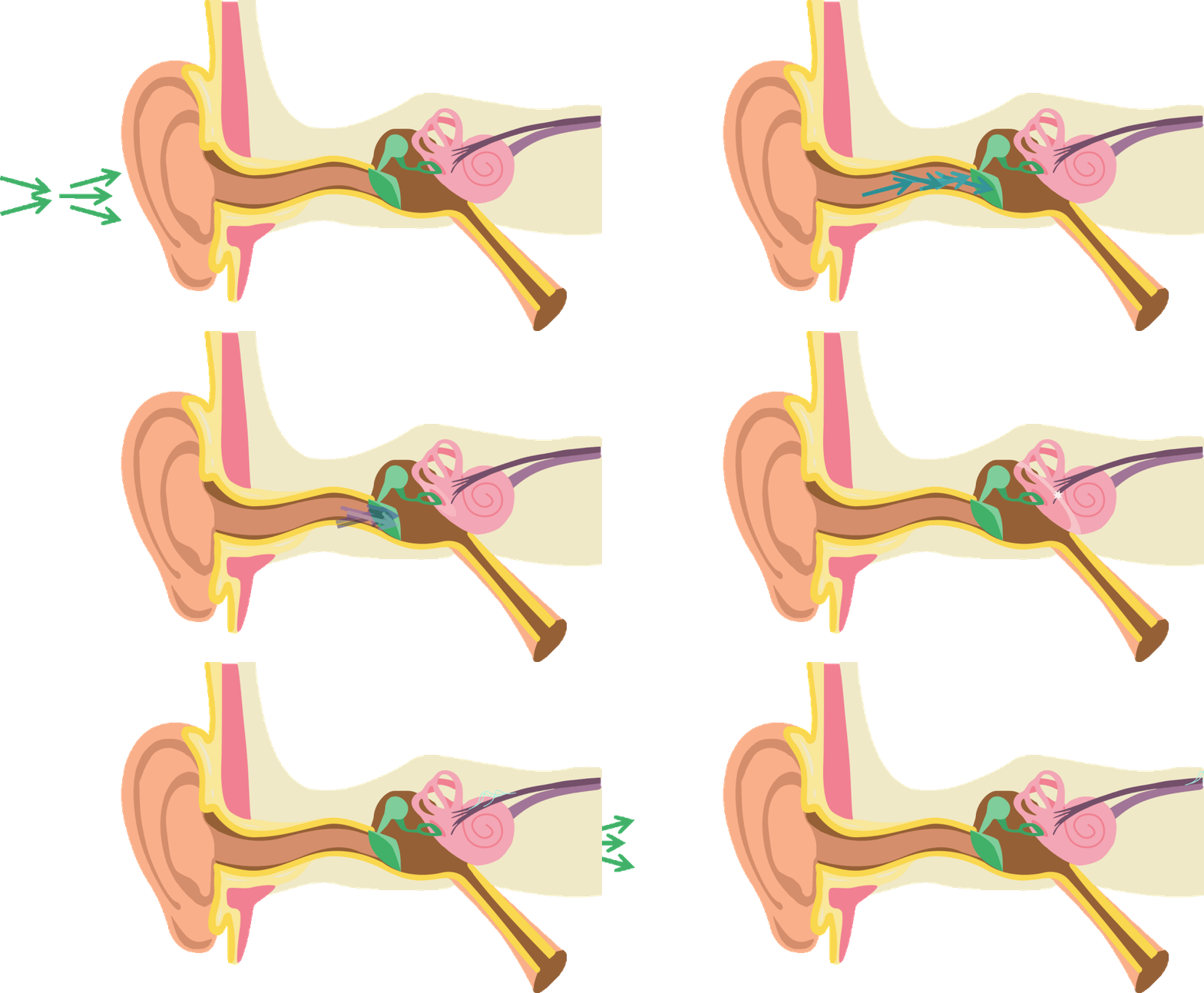
Hearing begins when sound waves travel through the air and enter the outer ear. These sound waves are variations in air pressure caused by vibrating objects.
The outer ear consists of the pinna (the visible part of the ear) and the ear canal. The pinna helps collect sound waves and funnel them into the ear canal.
The sound waves travel down the ear canal and strike the eardrum, causing it to vibrate. The eardrum is a thin membrane that separates the outer ear from the middle ear. Behind the eardrum are three tiny bones called the ossicles (the malleus, incus, and stapes), which amplify and transmit the vibrations.
-
The vibrations from the middle ear are transmitted to the cochlea, a spiral-shaped organ filled with fluid in the inner ear. Inside the cochlea, there are thousands of tiny hair cells that convert the vibrations into electrical signals.
The electrical signals generated by the hair cells travel along the auditory nerve to the brain.
The brain processes these electrical signals and interprets them as sound. Different regions of the brain are responsible for different aspects of hearing, such as identifying pitch, volume, and location of the sound.
Overall, hearing is a remarkable sensory process that allows us to perceive and interpret the sounds around us, enriching our experience of the world.